Haughton-Mars Project

HMP 2009


June 28, 2009

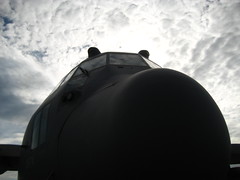
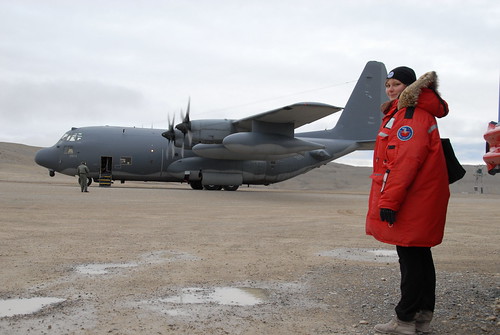
Air National Guard C-130 at YVR
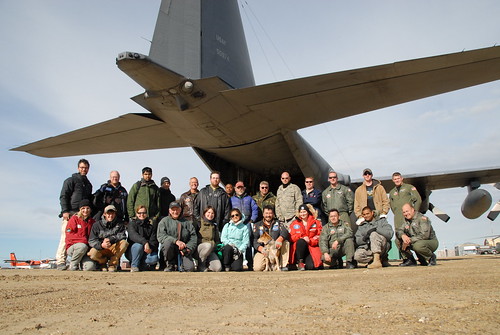
Yesterday an Air National Guard C-130 out of Long Island, New York left the Vancouver international airport after being loaded with gear and personnel for a flight to Resolute Bay in the Canadian high arctic. Personnel aboard included core HMP participants from the Mars Institute and Simon Fraser University.

This is the second year we've had support from the Air National Guard out of Long Island, New York. It is always much appreciated. We'll have more pictures with credits once we get them from Resolute. The support of the Air National Guard enables us to deploy cargo and people in a timely and cost effective way.

Today HMP personnel are busy organizing cargo for the first flight to the HMP Research Station on Devon Island tomorrow. Weather being what it is in the high arctic, all flights are subject to the weather and conditions on the ground at the HMP airstrip.

- Images from cargo loading at the Vancouver International Airport.

June 22, 2009

The 2009 HMP field season is almost upon us. This Saturday, June 27, the first participants from the Mars Institute core team will make their from Vancouver to Resolute Bay by way of an Air National Guard C-130 from the Long Island Air National Guard Rescue Unit.

This year will see over 50 participants from 11 organizations visiting the HMP Research Station on Devon Island including representatives from the Canadian Space Agency and NASA.

We'll have more detail on the field season in the coming week.

April 24, 2009

The Moon-1 Humvee Rover and Bombardier Snowmobiles

PRESS RELEASE: Mountain View, CA and Vancouver, BC, 24 April 2009 - An international team of researchers led by Mars Institute scientist Dr. Pascal Lee successfully reached the arctic community of Cambridge Bay, Nunavut, Canada on Friday, 17 April, after an 8-day, 500 km vehicular trek on sea-ice along the fabled Northwest Passage. The team of five departed Kugluktuk, Nunavut on 10 April aboard the Mars Institute’s Moon-1 Humvee Rover and two snowmobiles, and logged a record-breaking total of 494 km, the longest distance ever driven on sea-ice in a road vehicle.

The expedition is an integral part of the Haughton-Mars Project (HMP) on Devon Island, High Arctic, where research in space science and exploration is being conducted by the National Aeronautics and Space Administration (NASA), the Canadian Space Agency (CSA), the Mars Institute, the SETI Institute, and other partnering organizations. The primary goal of the Northwest Passage Drive Expedition was to transport the Mars Institute’s new Moon-1 Humvee Rover from Kugluktuk to Devon Island. The rover serves as a concept vehicle simulating future pressurized rovers to be used by humans on the Moon and Mars.

During their traverse from Kugluktuk to Cambridge Bay, the field team encountered challenging weather and ice surface conditions, including a 40-hour whiteout, unseasonably thick snow cover, massive rough ice, and treacherous snow-covered leads (open cracks in the sea-ice exposing liquid seawater). At one point, the rear of the Moon-1 sank into one such hidden lead, but the vehicle was saved by the team’s immediate actions and thanks to the Humvee’s unique capabilities and equipment. “For a moment there, I thought this might be it, but we had come prepared and trained, and our rover is an incredible machine” says Lee.

Campsite Four of the Northwest Passage Drive Expedition

Because of the unusual amount of late snow covering the region this year which prevents efficient progress on sea-ice and dangerously obscures open leads, the Mars Institute has decided to pause the Northwest Passage Drive Expedition in Cambridge Bay and is now seeking to airlift the Moon-1 Humvee Rover the rest of the way to Resolute Bay. Once in Resolute, the driving expedition will resume in order to transfer the rover from Cornwallis Island to Devon Island, where it will be used for lunar exploration research for NASA at the Haughton-Mars Project Research Station this coming Summer and beyond.

Continue reading "Mars Institute "Moon-1" Humvee Rover Successfully Completes 500 km Drive Along Northwest Passage" »

April 17, 2009

Late this morning after traveling across the arctic ice for the last week from Kugluktuk and covering over 500 kilometers, the Northwest Passage Drive Expedition team arrived safely in Cambridge Bay on the south-eastern portion of Victoria Island. Never before has anyone driven this route, a portion of the Northwest Passage, in a road vehicle.

Along the way the team experienced highs and lows as the drive started off slowly, encountered a blizzard which kept them isolated in one location for a day and half and also had a the rear of the Moon-1 Humvee Rover briefly go through the ice.

They encountered scenery none of them have ever experienced and few have ever seen. They were not alone on their journey as flocks of birds could be seen at times.

This is an experience the team will remember for a lifetime and an accomplishment all should be proud of. Their experiences were documented for a film to come out later this year. We will post some of the images the team took and perhaps some short video in the coming days. Further updates will be posted as well in the coming days. For now the team is resting in Cambridge Bay.

April 16, 2009

The Northwest Passage Expedition team had an excellent day of driving. Covering over 100 km, they are now in shouting distance of Cambridge Bay! They are parked for the night by the Southernmost Finlayson Island. Tomorrow, they will drive north along the island chain to Long Point, to avoid blocky ice seen in radar images from space by Mission Support, as well as reported pressure ridges. Indeed, the ice approaching Cambridge Bay has been increasingly blocky today. Everybody is healthy, warm, and having fun. The team is looking forward to an expected arrival in Cambridge Bay, after a drive from the landing area at Long Point.

About the Haughton-Mars Project

The Haughton-Mars Project (HMP) is an international interdisciplinary field research project centered on the scientific study of the Haughton impact structure and surrounding terrain, Devon Island, High Arctic, viewed as a terrestrial analog for the Mars.

The rocky polar desert setting, geologic features and biological attributes of the site offer unique insights into the possible evolution of Mars - in particular the history of water and of past climates on Mars - the effects of impacts on Earth and on other planets, and the possibilities and limits of life in extreme environments.

In parallel with its Science program, the HMP supports an Exploration program aimed at developing new technologies, strategies, humans factors experience, and field-based operational know-how key to planning the future exploration of the Moon, Mars and other planets by robots and humans.

The HMP is managed and operated by the Mars Institute with support from the SETI Institute. HMP-2009 is our 13th field season.

Mars Institute - Canadian Space Agency (CSA) - SETI Institute - NASA
© 2008 Copyright Mars Institute. Mars on Earth TM · Mars on Earth © 2001-2008. Contact us.

HMP Research Station
flickr Photostream

RSS Feed
Twitter - Follow Me

HMP Research Station YouTube Video Channel

Calendar

June 2009
Sun Mon Tue Wed Thu Fri Sat
1 2 3 4 5 6
7 8 9 10 11 12 13
14 15 16 17 18 19 20
21 22 23 24 25 26 27
28 29 30